
Best Lead Generation Websites for Ontario Businesses
Some websites bring in inquiries while the owner is on a job site. Others leave leads waiting until someone checks an inbox. These lead generation websites and platforms take different routes to finding, qualifying, and following up with prospects.
We analyzed 92 reviews and comments from the App Store, Trustpilot and YouTube about lead generation websites and found that 28% mentioned excellent functionality.
For Ontario businesses, the key difference is what happens after someone shows interest. IronSpur Web Services pairs SEO and lead capture with AI follow-up and CRM integration. The other options focus on visitor intent, B2B data, or sales outreach.
Table of Contents
Akrons: AI assistants for qualification and appointment booking
BitWide: Canadian lead generation and sales growth strategies
1. IronSpur Web Services
IronSpur Web Services builds managed websites, SEO, and AI-powered lead acquisition systems for businesses across Ontario. We’re the fit for owners who want one connected system to bring in inquiries and keep follow-up moving, especially trades businesses whose teams spend much of the day away from a desk.
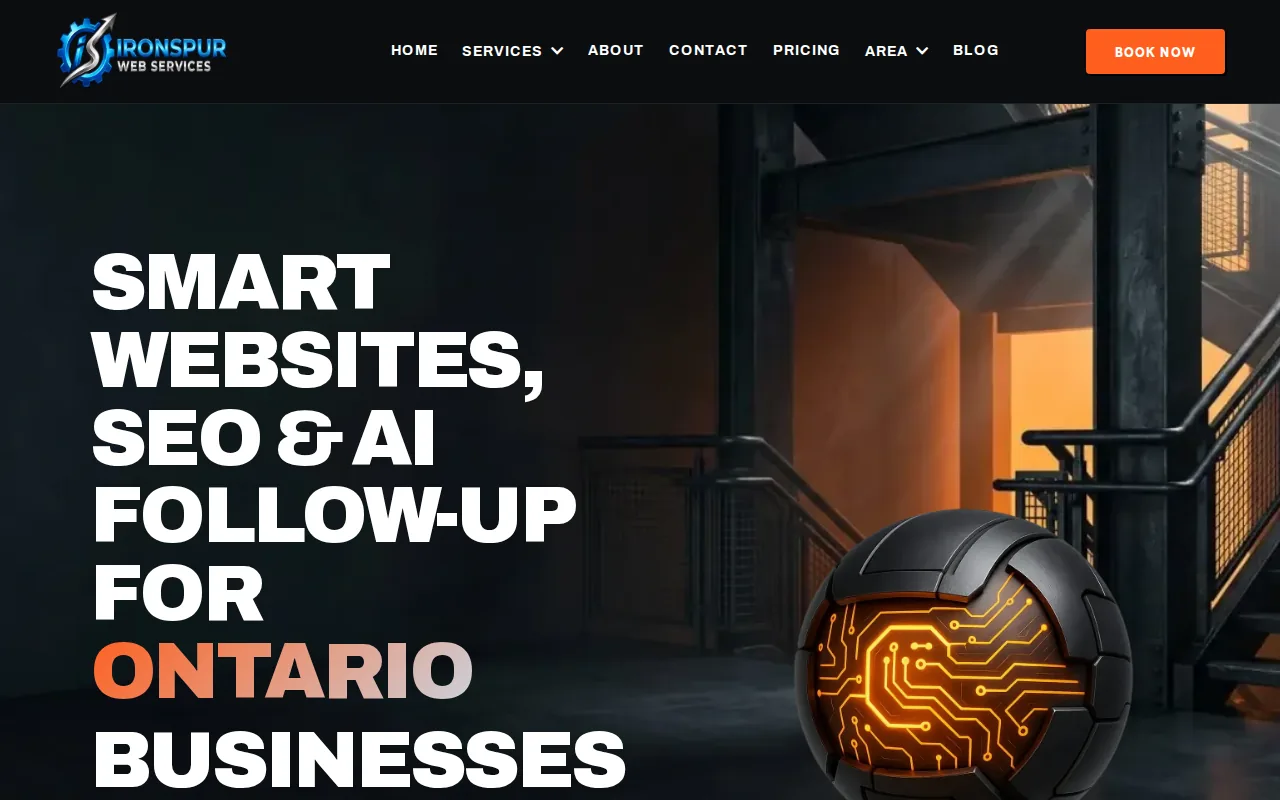
We don’t just build a site; we engineer digital infrastructure around the work it needs to do. That includes conversion architecture, lead capture, automated follow-up, appointment booking, and CRM integration. A prospect can reach you through a website form, then move into a follow-up process instead of sitting in an inbox while your crew is on a service call.
Our home base is in Stoney Creek, and our local SEO work can target service areas such as Hamilton, Burlington, Ancaster, Dundas, and Oakville. For a contractor serving more than one city, the aim is to make the right service page visible to nearby searchers, then give each visitor a clear route to request a quote or book an appointment.
We also build mobile-managed systems, so business owners can keep track of leads while away from the office. And our website describes lead routing and CRM dispatch within sixty seconds. That matters when a new inquiry arrives during a site visit or after business hours. Eyeballs don’t pay the bills; conversions do.
Our lead capture systems can include forms, chat, and booking paths. Clear site structure and useful page content help search engines understand a site. Our technical SEO and local pages give the capture system a way to reach people already looking for your service.
One point separates this setup from many broad AI claims in the market: IronSpur Web Services confirms CRM integration alongside AI follow-up and appointment booking. If you need a managed growth engine rather than a standalone prospecting database, start here.
Key Takeaway: IronSpur Web Services connects local search, lead capture, CRM dispatch, and automated follow-up in one managed system.
2. Leadfeeder: identify anonymous B2B website visitors
Leadfeeder helps B2B teams identify companies visiting their websites, even when those visitors don’t fill out a form. It’s best for businesses that already get relevant site traffic but need more context on which accounts show interest.
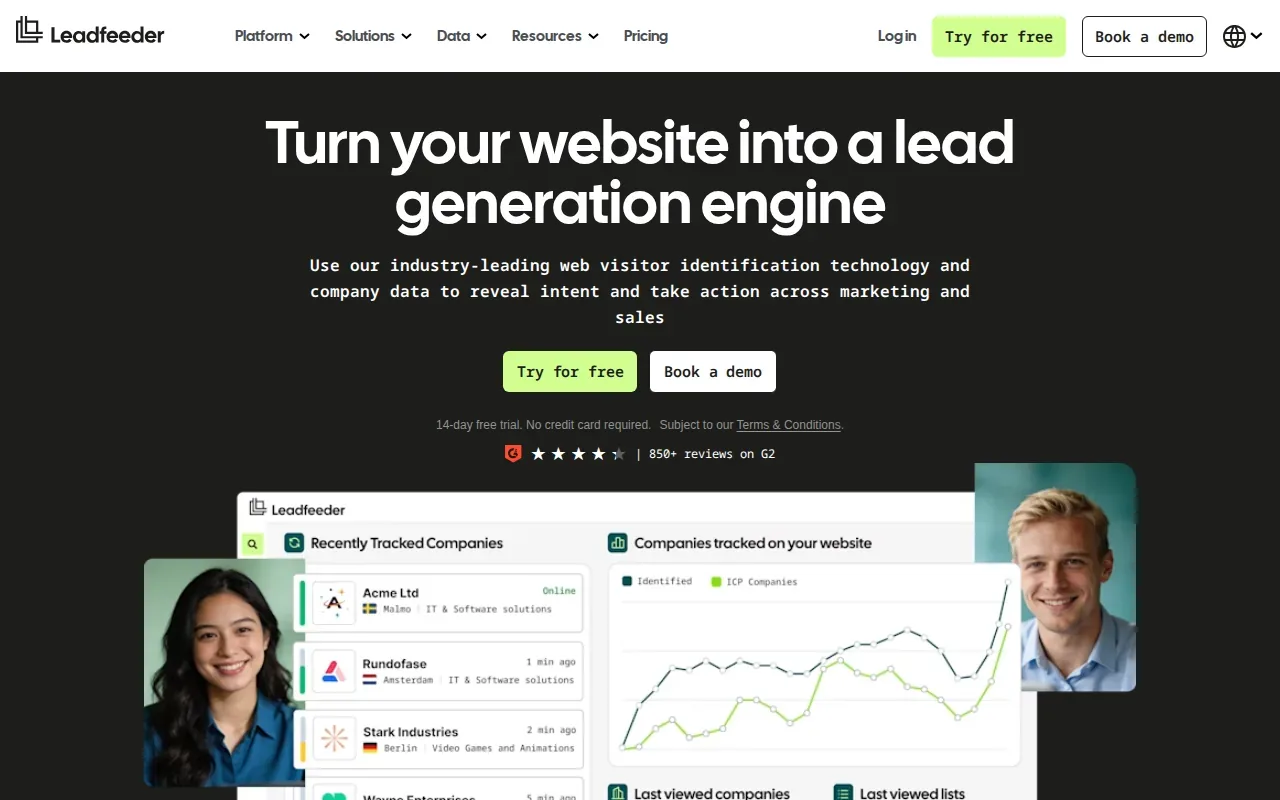
Its focus is visitor intent. Teams can look at company visits and signals such as repeat visits or views of key pages, then use that context to decide which accounts deserve a timely follow-up. For example, if a manufacturing supplier sees a company return to a service page, sales staff can prioritize a relevant conversation rather than work through a cold list with no website context.
Leadfeeder also describes filters for building audiences around company and behaviour details. It can sync audience information to CRMs and other marketing tools, so a team can connect visitor activity with its existing follow-up process. That makes it different from a website form alone: the form records a known inquiry, while visitor identification can surface company interest before a person submits one.
For Ontario teams that sell to other businesses, this can help connect website activity with account-based marketing. It won’t replace a clear offer or a useful landing page. It helps the team decide what to do with visits that might otherwise remain anonymous.
There’s a trade-off in fit. A local roofer or electrician may need a clear quote form and fast response more than company-level visitor insights. A B2B supplier with ongoing traffic and a sales team may have more reason to act on account intent. Choose this route when identifying interested businesses is a real part of your sales process.
3. Apollo: connect B2B data, intelligence, and sales execution
Apollo is an AI sales platform built around B2B data, intelligence, and sales execution. It’s best for sales teams that need to find target contacts and organize outbound outreach in a connected workflow.
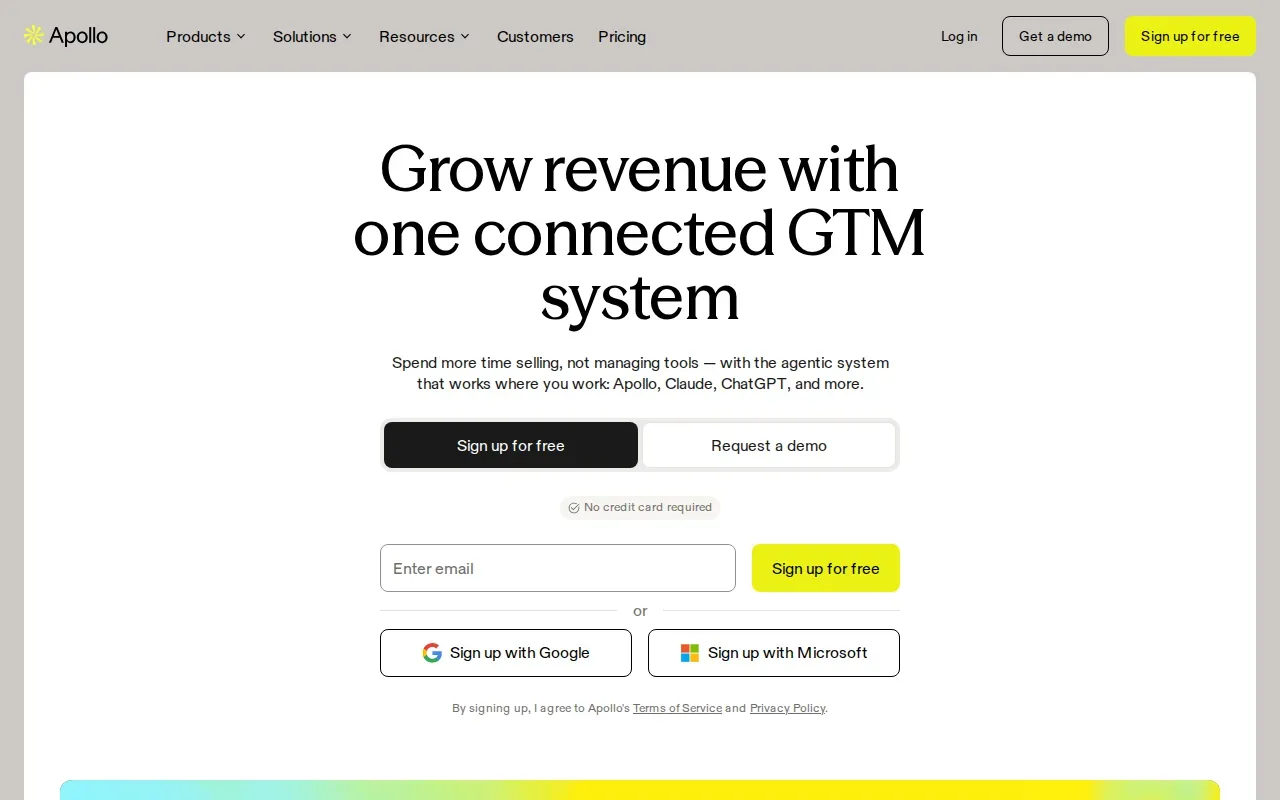
The platform describes contact search with filters, prospect research, intent signals, and lead scoring. Sales teams can use those tools to narrow a broad market into a list of people or businesses that fit their target profile. That can be useful when the next job is proactive outreach, rather than waiting for a prospect to find a service page.
Apollo also supports outreach sequences across channels such as email and calls. A team can use that structure to plan follow-up against a list of prospects, then review which contacts show signs of interest.
CRM connections matter here too. Apollo says it connects with systems such as Salesforce and HubSpot, letting teams sync contact activity and sequence results rather than copy every detail by hand. That can reduce admin work, but it still calls for clear targeting and thoughtful messages. More outreach volume alone won’t make a poor-fit prospect more likely to buy.
Think of Apollo as a prospecting and sales execution system, not a replacement for a local service website. A trade business in Milton that depends on nearby homeowners may have a different need from a company selling to a defined group of business accounts. For the latter, Apollo’s connected data and outreach workflow can support a more active pipeline.
Use it when the team has a defined B2B audience and someone responsible for managing outbound activity. If your main bottleneck is missed inbound inquiries, first fix the website-to-response path.
4. ZoomInfo: B2B data and go-to-market intelligence
ZoomInfo combines B2B data with go-to-market intelligence and sales and marketing tools. It’s best for larger or more structured teams that need account research, buying signals, and support for coordinated sales activity.
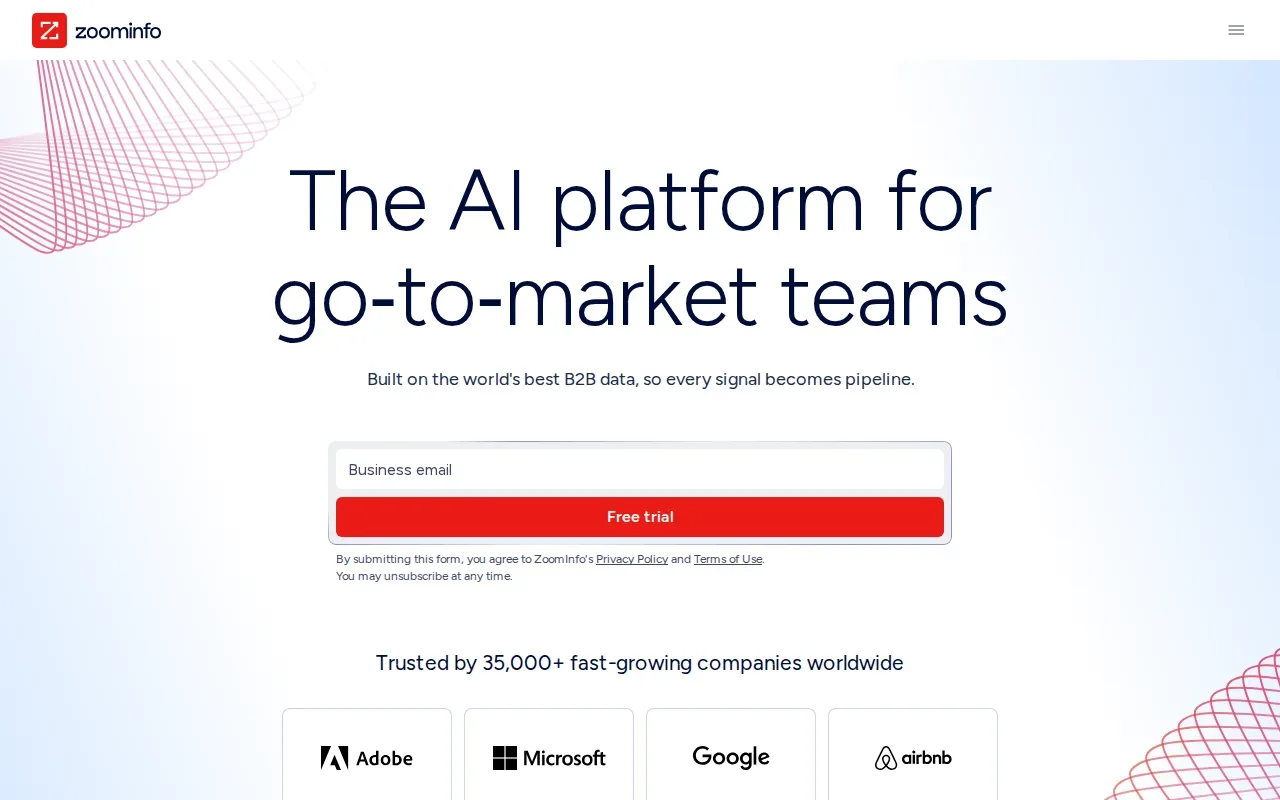
ZoomInfo describes company and contact data, intent signals, and tools to help teams prioritize accounts. For a sales team working across several industries or regions, those details can help shape territory planning and outreach priorities. Instead of treating every company on a prospect list the same way, a team can use account information to focus on likely-fit buyers.
A good handoff depends on more than having a database: the team still needs agreed rules for ownership, follow-up, and what counts as a qualified opportunity.
ZoomInfo’s reach and feature set make it a different kind of choice from a managed website service. It can support go-to-market operations, but it doesn’t replace the work of building a local service page that answers a homeowner’s question and collects a quote request. Ontario businesses should match the platform to their sales structure, not choose it simply because it has a broad feature set.
Data access also brings a need for care. Teams should set rules for how contact details are used and keep their outreach aligned with their own obligations. If you’re choosing ZoomInfo, assess the workflow around the data as closely as the data itself.
For a business with defined account segments and a sales operation that can act on buying signals, ZoomInfo may fit. For a small crew that mainly needs more booked local jobs, prioritize the website and response system first.
5. Akrons: AI assistants for qualification and appointment booking
Akrons builds AI assistants that can answer questions, qualify prospects, book appointments, and hand off high-intent leads. It’s best for companies that want automated conversations and lead routing connected to their website and business tools.
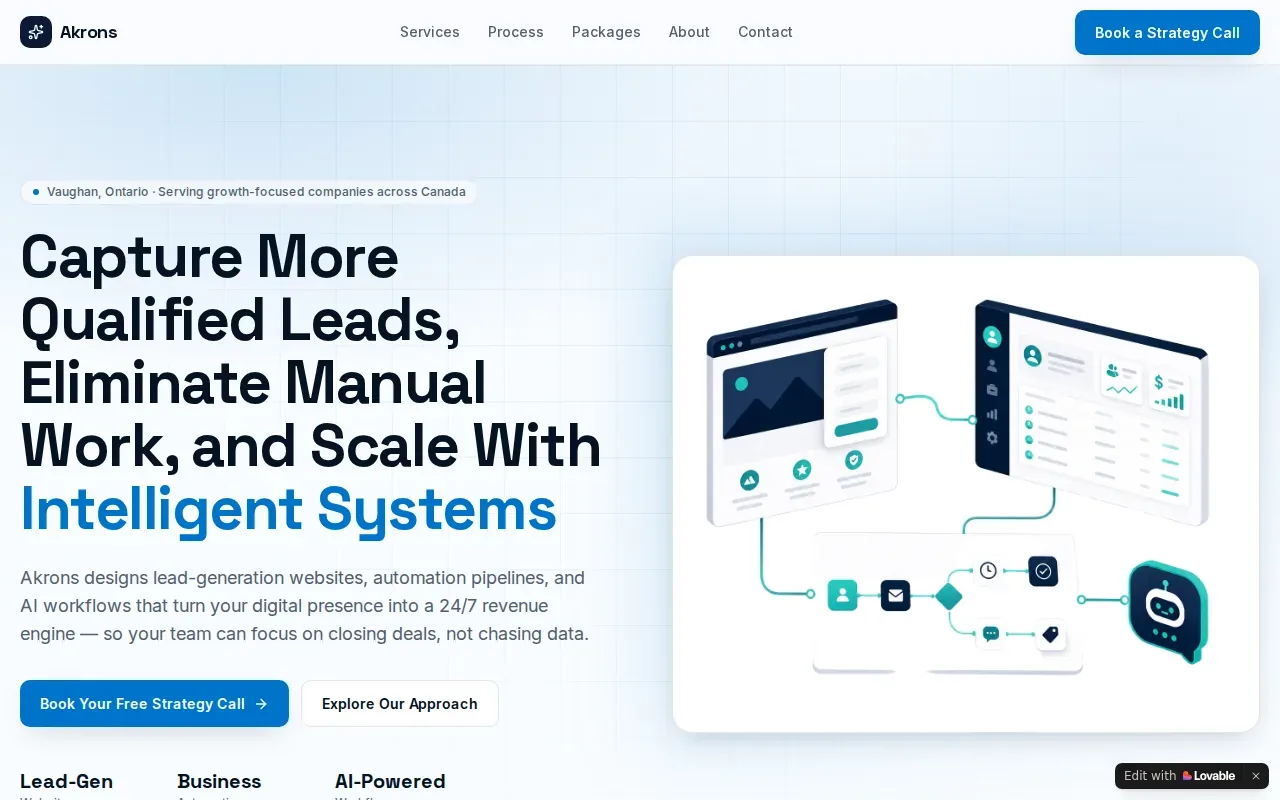
For a trade business, a lead may arrive while a technician is driving between jobs or working in a customer’s home. An AI assistant can answer common questions and collect details for the next step. Akrons describes assistants that can qualify prospects and book appointments, then pass hot leads to the team. That makes the service relevant when slow replies or repetitive intake questions are creating extra work.
Akrons also describes connected workflows for websites, CRMs, and email. Its focus is broader than a chat window: it includes automation logic that routes information and prompts follow-up. A company can map its intake process first, then decide where an assistant should respond and when a person should take over.
That handoff needs clear rules. A bot that gathers a name but leaves a complex service question unresolved hasn’t completed the job. Set the assistant’s scope around the questions it can answer, the details staff need for qualification, and the point where a human should step in. Akrons describes escalation of high-intent leads to a sales team, which gives a business a basis for that handoff; teams planning similar call and booking workflows can use AI receptionist setup steps for small businesses to map call rules, calendar and CRM links, and testing.
For Ontario owners comparing lead generation websites, Akrons may suit a team that already knows where leads enter but wants more automated qualification and booking. It may be less useful if the business has no defined intake steps or staff to follow up on a routed lead. Automation can pass work along; your team still needs to decide what happens next.
When comparing AI qualification methods, this overview of AI lead qualification tools can help frame the questions around scoring, intake, and workflow fit.
6. BitWide: Canadian lead generation and sales growth strategies
BitWide specializes in customized lead generation and sales growth strategies for Canadian businesses. It’s best for companies that want help shaping a sales approach and reaching prospects through methods such as cold calling or email marketing.
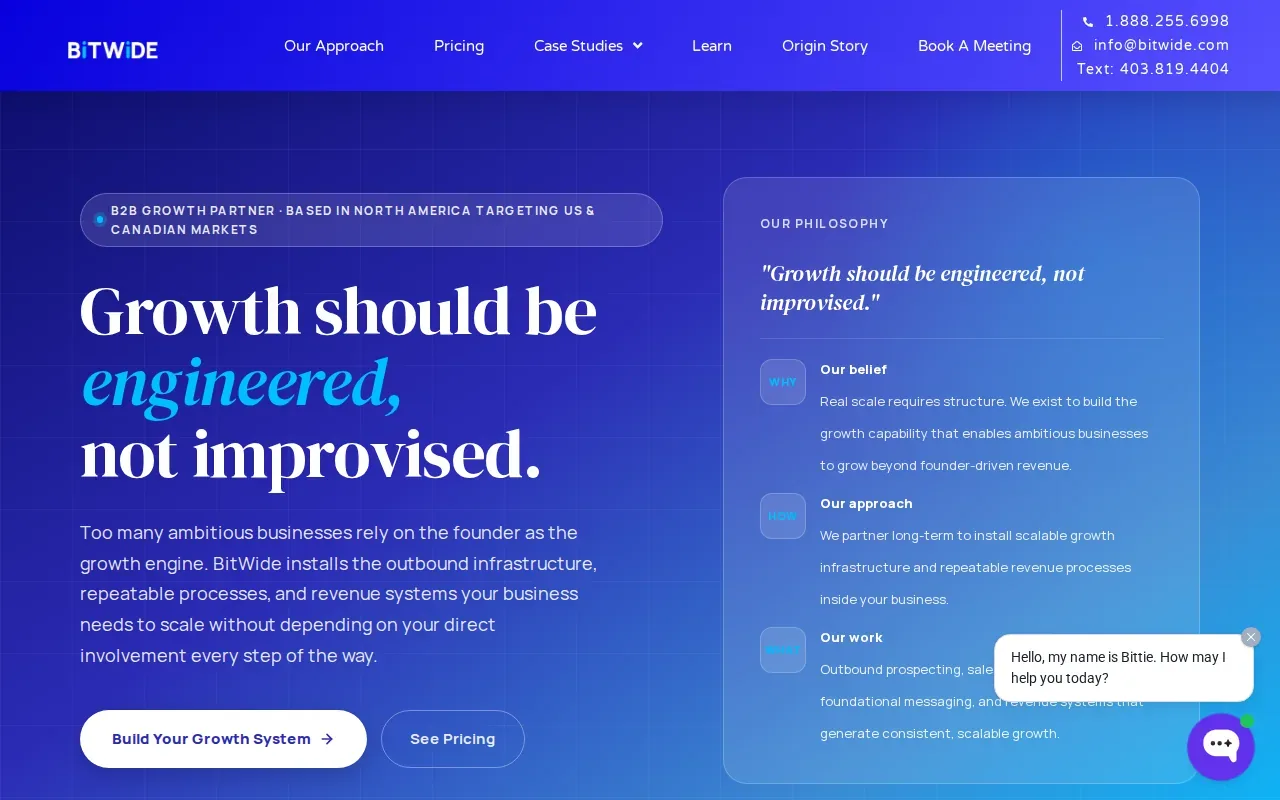
BitWide’s work starts with defining the ideal customer and building the message and channel strategy before outreach begins. That planning can help a business put a sharper frame around who it wants to reach and what those prospects need to hear. For a B2B company with a sales team, this can be useful when the main challenge is a scattered outbound approach rather than a lack of website traffic.
The company also describes experience dating back to 1987. Its stated lead capture methods include cold calling and email marketing. Those channels put the focus on direct prospecting, so teams should be ready to handle replies and keep follow-up organized once outreach starts.
BitWide differs from a managed web system. Its described services centre on customized lead generation and sales growth strategy; IronSpur Web Services brings together website design, SEO, capture, and CRM-based follow-up. The right fit depends on where the gap sits. If you need a defined outbound motion, BitWide’s focus may align. If you need your site to turn local search interest into managed inquiries, the website and automation layer deserves priority.
Before engaging any sales growth partner, write down the audience, the offer, and the next action you want a prospect to take. That makes it easier to judge whether the work supports your revenue process instead of adding activity for its own sake.
Compare these lead generation websites and platforms
These options work at different points in the lead path. IronSpur Web Services focuses on a managed website and follow-up system. Leadfeeder, Apollo, and ZoomInfo centre on B2B insight or prospecting, while Akrons centres on AI conversations and BitWide on customized sales growth strategies.
Option | Best fit | Where it works in the lead process | CRM or follow-up angle |
|---|---|---|---|
IronSpur Web Services | Ontario businesses seeking a managed web and lead system | Local SEO, website capture, and appointment booking | CRM integration with automated follow-up |
Leadfeeder | B2B teams with relevant site traffic | Identifies visiting companies and buying intent | Can sync audience information to CRM workflows |
Apollo | B2B teams running outbound sales | Contact research, scoring, and outreach sequences | CRM connections and sales activity sync |
ZoomInfo | Teams managing account-based sales activity | Company data, intent signals, and account research | Lead routing, enrichment, and CRM syncing |
Akrons | Businesses automating prospect conversations | AI qualification and appointment booking | Connected workflows for CRM and email |
BitWide | Canadian businesses shaping outbound growth | Customer definition, messaging, and outreach strategy | Cold calling and email marketing methods |
Costs depend on the service model and scope. In the Ontario market findings, public starting prices were uncommon, so compare what the work includes rather than treating a low entry price as the whole cost. Ask how leads move from first contact to a booked conversation, who manages the workflow, and what ongoing work is part of the service.
For local trades, test the route a customer takes on a mobile device: find the service page, submit an inquiry, and see what follow-up arrives. The Google Business Profile lead generation tactics resource covers another part of local discovery, which can support the traffic side of that same path.
Pro Tip: Before choosing a platform, write down the lead’s first action and who owns the next response. That simple map exposes gaps between capture, CRM dispatch, and booking.
FAQ
What is the best lead generation website for an Ontario small business?
The best fit depends on whether you need local inquiries, B2B prospecting, or automated qualification. For an Ontario business seeking a managed website with SEO, lead capture, CRM integration, and AI follow-up, IronSpur Web Services is the most directly aligned option here. A B2B team may prefer a visitor-intent or outbound platform for a different part of its sales process.
How do lead generation websites turn visitors into customers?
They help visitors find a relevant service page, take a clear next step, and receive follow-up. A useful path may begin with local SEO, then move to a mobile-friendly form or booking option. After submission, the inquiry should reach the right person or CRM promptly. The business still needs a clear offer and a team ready to respond.
Do lead generation platforms integrate with a CRM?
Some do, but integration depth differs by option. IronSpur Web Services describes CRM integration with automated follow-up. Leadfeeder, Apollo, ZoomInfo, and Akrons serve different parts of the sales process. Before buying, ask what information transfers, what event triggers follow-up, and how your team handles a lead that needs a person.
How much do lead generation websites cost?
Costs vary with the work involved, such as managed web design, SEO, prospect data, or sales automation. Public starting prices are uncommon in this market, so compare the full scope rather than relying on a headline rate. Ask what setup and ongoing work cover, and whether the service includes the follow-up system your team needs.
What should I collect on a lead form?
Ask only for details your team needs to decide the next step. A service business may need the person’s contact details and a short description of the job. Add more fields only when they help qualify or route an inquiry. Make the form easy to complete on a phone, then set a clear process for responding.
Conclusion
If you want a managed system that connects local SEO with lead capture, CRM integration, and automated follow-up, start with IronSpur Web Services. Review your current lead path, from the service page to the first response, then use our service overview to see how that workflow could fit your Ontario business.